Figures reported by the manufacturer
- Displacement
- 14.6 L
- Test maximum power
- 600 hp
- Peak torque
- 2,800 N·m
- Maximum brake thermal efficiency
- 46.8%
- Manufacturer-reported parts interchangeability with conventional-fuel models
- >90%
Official announcement: the testing milestone
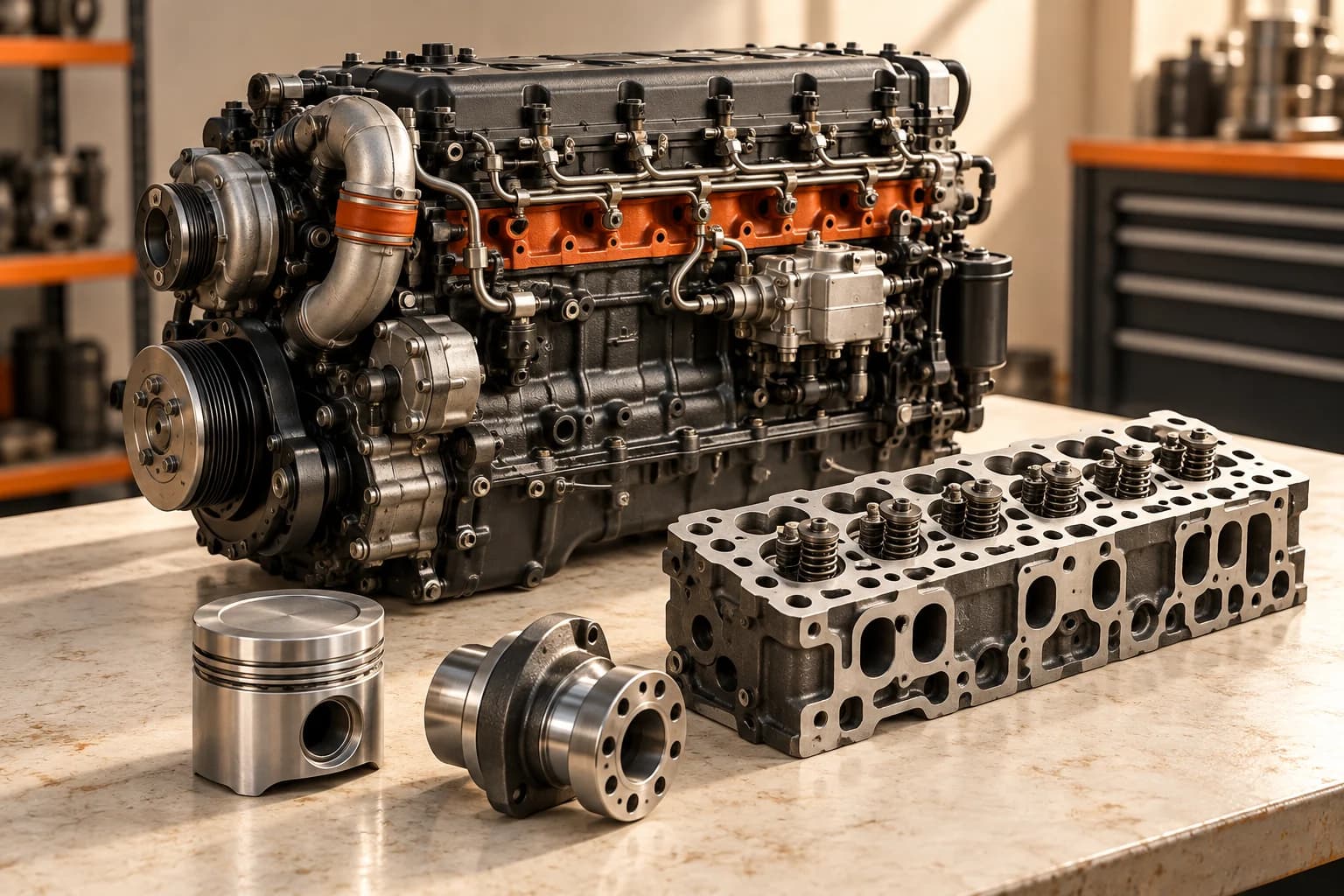
Weichai's July 4 release reports that its direct-injection WP15 hydrogen engine passed a China VI-level environmental emissions certification test on July 3. The figures above are manufacturer disclosures, not evidence that an export vehicle has local approval.
LAIYI analysis: choosing an industrial pathway
Power is only one question. Which production processes, engineering skills and service tools can be retained, and which need to be developed again? That distinction helps frame the supply-chain transition rather than reducing the debate to a horsepower comparison.
Hydrogen combustion and fuel-cell propulsion are different routes. Sharing a fuel does not make their components or service arrangements equivalent. A useful commercial comparison starts with a defined vehicle and operating task, then examines the relevant system.
LAIYI analysis: what component commonality could mean
A high overall commonality figure may indicate opportunities to retain parts of a supply chain. It does not identify which individual components remain unchanged. The useful evidence for the aftermarket is a parts catalog with platform, version and replacement relationships.
A research ledger can separate retained, modified and dedicated components. Following those groups as official service information appears is more useful than treating an aggregate percentage as permission to interchange a particular part.
LAIYI analysis: interpreting 46.8% thermal efficiency
A mathematical illustration helps: under the relevant test conditions, 100 units of fuel energy at 46.8% brake thermal efficiency correspond to about 46.8 units of useful shaft output. This describes an energy-conversion ratio, not a 46.8% saving against a diesel truck. It is an explanation of the measure, not a route-cost calculation.
The next step is to connect engine results with vehicle load, route and refuelling conditions. In Russia and other export markets, local demonstration records, fuel availability and service support are closer to a fleet decision than an isolated bench result.
Three signals to follow next
Our watch list moves beyond headline performance toward vehicle integration, repeatable operating results and usable aftermarket documentation.
- Named vehicle applications and operating tasks.
- Operating records with clearly stated conditions.
- Parts catalogs, service documentation and training arrangements.
Sources and related resources
Manufacturer data and announcements are attributed to the sources above. LAIYI's interpretation is editorial analysis; it does not imply manufacturer endorsement.